
Which Stream Reaches the Bend First
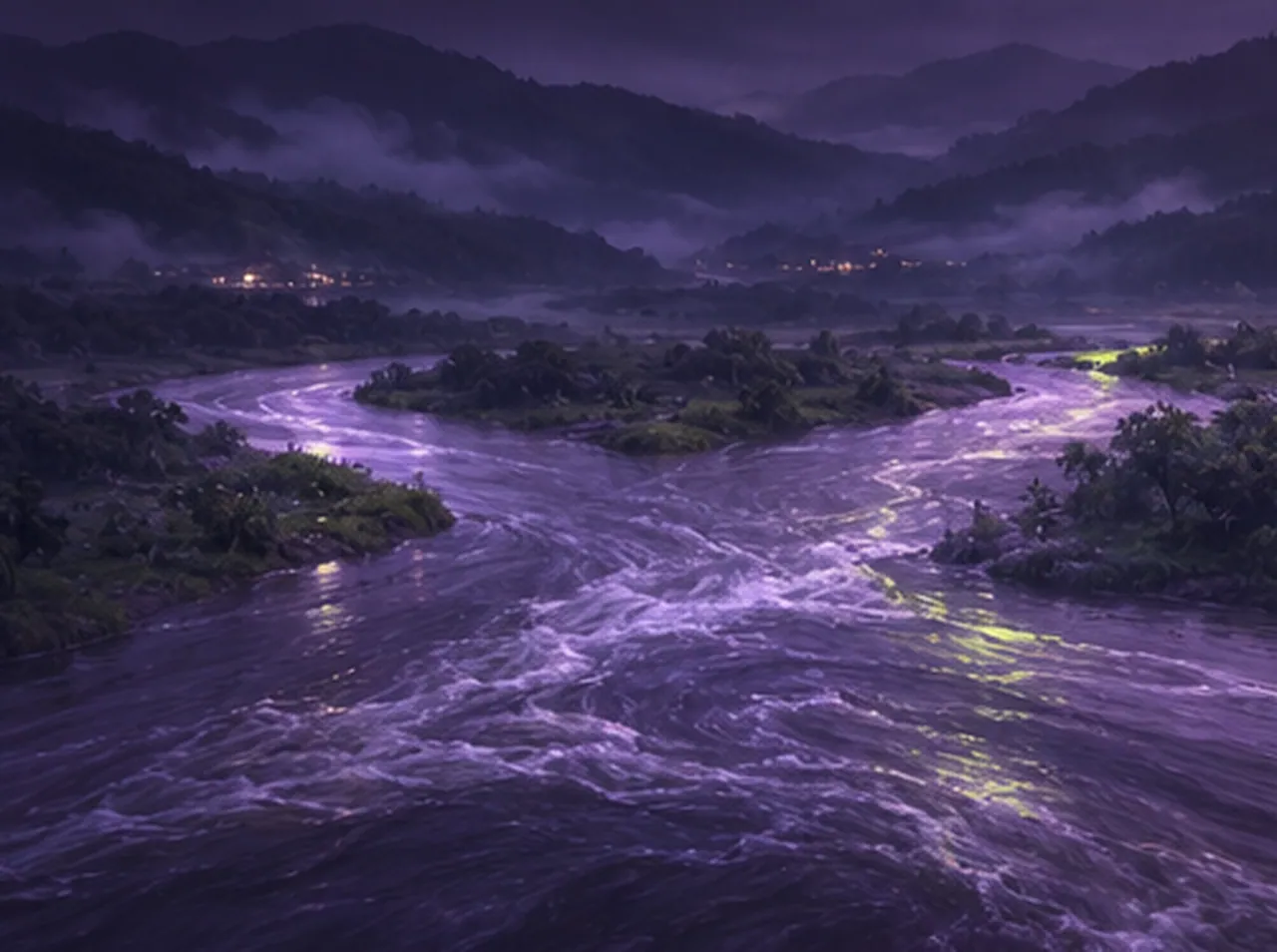
A narrow branch arrives above an open part of the river. Another branch reaches the same bend from close to the bank. If they are seen as two bright parallel strips in a single high view, a dragon might assume they will meet after the same amount of time. The closer stream passes around a notch and reaches the bend in a different direction. We gave the two branches a pair of visible positions so the dragon can use more than distance in the image to decide which one to turn.
Find a piece of ground both streams will pass
A small row of raised stones begins near the bank and stretches almost to the far side. The middle stone catches light from both streams. Keep it as a shared point before making any attempt to divert water. The close branch reaches the first end of the row and starts following it. The distant branch stays visible longer behind the middle one. From the raised grass a keeper of the river can see the difference without needing to travel with one stream and lose the other. The Village Below the Flood uses this view while preparing for a shift above the sleeping houses.
Read time against a recognizable interval
Before the early branch reaches the row, a small strip of light appears around a narrower rock. The later branch may also send a thin visible line from the far state before the largest part arrives. Foam Arrives before the Crest traces an observation of that kind. The two lines should be distinct in their relation to real places. Wait at the first row and mark the time one reaches the middle stone. Then compare how many useful body lengths the dragon can move before the other is in the same part of the view. Even a rough estimate has more context than trying to name the speed of a stream from its color.
Keep a reason to choose the next turn
If the early branch can already follow an open outlet, the dragon has a reason to spend more of its time on the larger late one. If the early branch is heading into the lowest grass by the houses, leave room on the near side before moving toward the far bank. A Coil at the Spillway looks at a turn that can change both flows in different ways. For this trial give the two approaches a little difference in height. The lower branch can be followed while keeping the higher one visible beyond the row of stones.
Return to a point that remembers the old view
After choosing the first diversion, come back near the middle stone and see what part of the old direction remains. A different front may have reached the same patch by then. Preserve one early trace in the route notes so a player can compare their timing before the current changed. If they mistook a thin front for the whole branch, an earlier view from the grass can show why that looked convincing. The next move can leave some room for the current they saw later. A good turn is something the dragon can reconsider without forgetting what happened on approach.
Ask what the dragon has time to change
A person reviewing the route can point to the first bank they would visit and say which branch they would check before turning. If they can compare both streams against the middle stone, the wide picture has supplied an actionable observation. Some players may choose to place the body before either current is fully known. Keep the return view available so they can identify what arrived after their first move. The river should remain a place to look at a second time rather than a pair of direction icons giving fixed answers before the flood reaches the bend.